A knock at the door
Imagine someone knocks on your front door wearing a hotel uniform. They know your name. They know which hotel you booked, and when. They just need your credit card âto confirm.â
Youâd probably believe them. Thatâs exactly why this scam works.
How the scam works
Police in Singapore warned about a surge in this scam on October 9.
Hereâs what they say happens:
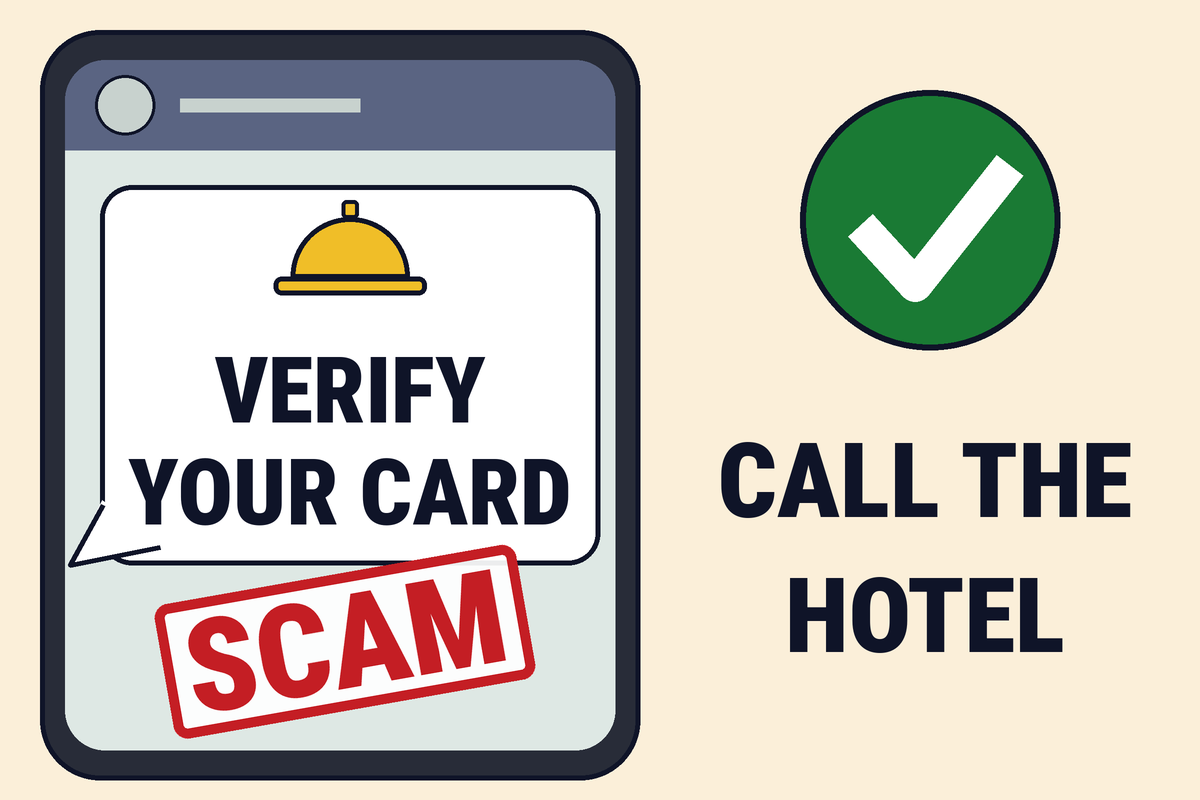
- A message arrives, usually on WhatsApp, or sometimes by email. It looks like itâs from a hotel or a booking website.
- It asks you to âverifyâ your card or confirm your upcoming stay.
- Sometimes the message includes your real booking details. That makes it feel genuine.
- It sends you a link to âsecureâ your booking and promises no money will be taken.
- You type in your card details and approve it.
- Later, charges you never approved show up on your card. Many people only discover the trick after that, when they contact the hotel directly.
How do scammers know your plans?
In April, the BBC reported that criminals got into Booking.com customer data. Booking.com said they accessed customersâ names, email addresses, phone numbers and booking details. It said customersâ financial information was not taken from its systems.
A security expert at Norton, Luis Corrons, explained why that matters. He said the stolen data lets criminals mention âthe real property, the real travel dates,â so the scam feels like normal customer service.
How big is it?
In Singapore alone, police have counted at least 148 cases since January 2026, with losses of at least 185,000 Singapore dollars.
Thatâs just one countryâs count.
The golden rule
Booking.com says it will never ask you to share credit card details by email, phone, WhatsApp or text.
Singapore police give two simple tips:
- Check with the hotel using the phone number or email on the hotelâs own website, not the one in the message.
- Donât click links in messages you werenât expecting.
Sources
- Singapore Police Force, âPolice Advisory On Phishing Scams Involving Hotels And Hotel Bookings Platformsâ (Oct. 9, 2026): police.gov.sg
- BBC News, âBooking.com customers warned of âreservation hijackingâ after hackâ (April 15, 2026): bbc.com